
Dental Bridges in St. Petersburg, FL
Restore Your Smile’s Beauty and Function with a Custom Bridge
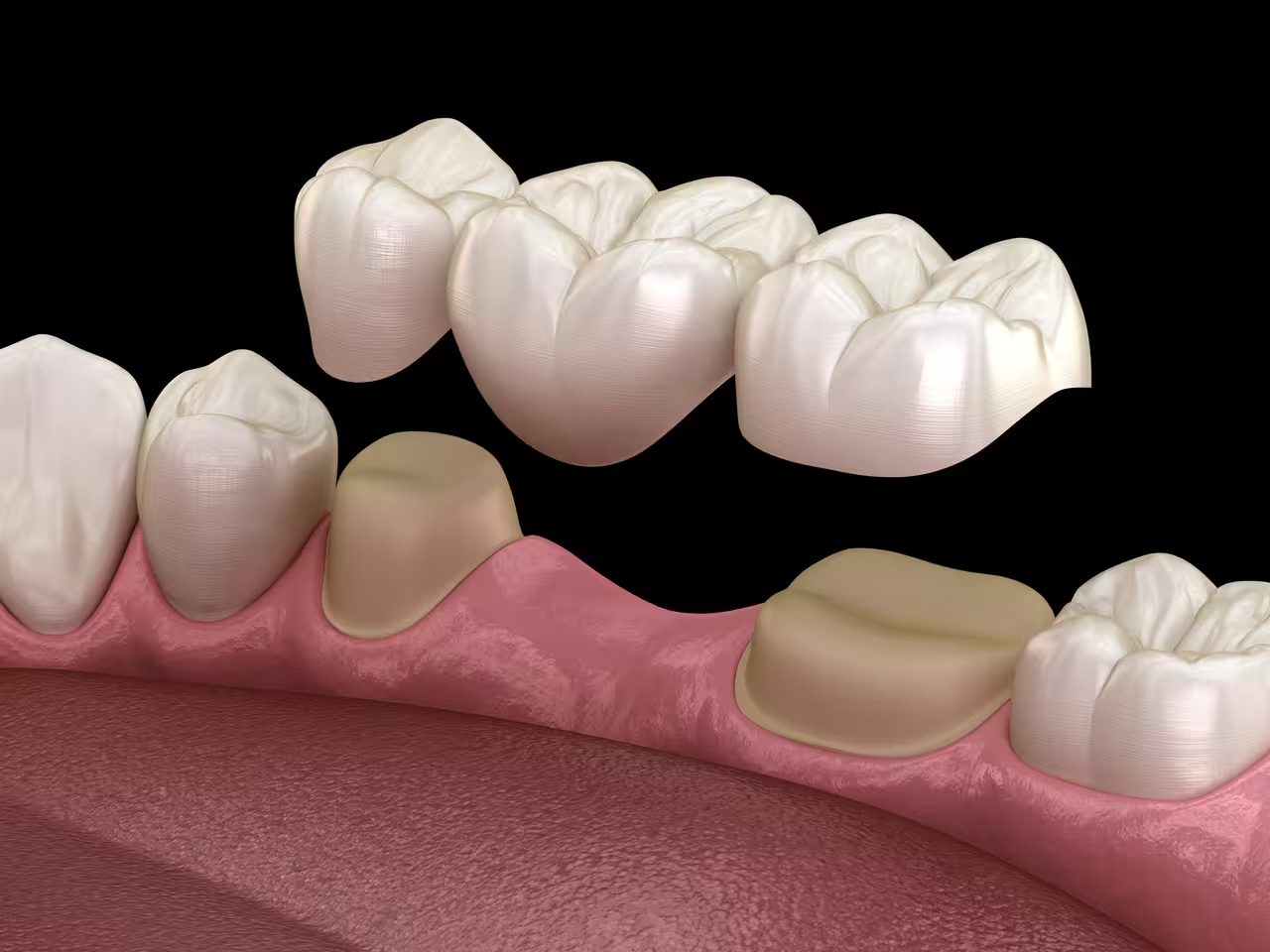
If you’re missing one or more teeth, a dental bridge can restore your smile’s appearance, function, and confidence. At Waterfront District Dental, Dr. Bart Knowles creates strong, natural-looking dental bridges designed to blend seamlessly with your existing teeth and restore full bite function.
We’re at 180 4th Ave NE in downtown St. Pete, a short walk from Beach Drive, and we see patients from all over the city. If you’re not sure a bridge is the right way to replace a missing tooth, we’ll go through your options with you, including implants and partial dentures, and tell you honestly which one we’d pick.

What Is a Dental Bridge?
A dental bridge is a fixed restoration that replaces one or more missing teeth. It literally “bridges” the gap using artificial teeth (called pontics) that are anchored by crowns on the natural teeth or implants on either side.
Bridges are custom-made to look and feel natural, restoring your ability to eat, speak, and smile with confidence.
Dr. Knowles may recommend a dental bridge if you:
- Have one or more missing teeth in a row
- Prefer a non-removable option for tooth replacement
- Want to prevent teeth from shifting into empty spaces
- Need to restore balance to your bite
Types of Dental Bridges
At Waterfront District Dental, we offer several bridge options depending on your needs, goals, and oral health:
Traditional Bridge
Anchored to crowns placed on adjacent teeth, this is the most common and reliable type of bridge for single or multiple tooth replacement.
Implant-Supported Bridge
Secured with dental implants rather than natural teeth, this type offers superior strength, longevity, and bone support an excellent choice for patients missing multiple teeth.
Cantilever Bridge
Used when only one neighboring tooth is available for support, though less common due to limited application.
Maryland (Bonded) Bridge
Uses a metal or porcelain framework bonded to the back of adjacent teeth. Ideal for replacing a single front tooth with minimal alteration.
Dr. Knowles will evaluate your case and recommend the best bridge type to restore both function and aesthetics.
Is a bridge the right choice for you?
A bridge is a good fit when the teeth next to the gap already need crowns, or when an implant isn’t possible because of bone loss or your health. It’s also usually quicker than an implant, with no surgery involved.
The tradeoff is that a traditional bridge depends on the teeth on either side. They’re reshaped to hold the crowns, and if one of them has a problem later, the whole bridge is affected. An implant stands on its own and leaves the neighboring teeth alone, but it takes longer and costs more upfront.
If you’re weighing the two, read how dental implants compare, or ask about partial dentures if several teeth are missing in different areas. Dr. Knowles will go over the pros and cons for your mouth specifically.
The Dental Bridge Process
Your bridge placement at Waterfront District Dental is carefully planned and executed for comfort and precision.
- Consultation and Evaluation
Dr. Knowles will examine your teeth, gums, and bone health, take digital X-rays or scans, and discuss your tooth replacement options. - Tooth Preparation
If using natural teeth for support, they are gently reshaped to accommodate the crowns that will hold the bridge in place. - Digital Impression and Design
We take a precise 3D digital scan to create your custom bridge, ensuring the perfect color, shape, and fit. - Temporary Bridge (if needed)
While your permanent bridge is being crafted, a temporary one protects your smile and maintains function. - Final Placement
Once ready, Dr. Knowles securely bonds or attaches your permanent bridge, making fine adjustments for a natural and comfortable fit.
With CEREC® same-day technology, some patients may even be eligible for expedited fabrication and placement.
Benefits of a Dental Bridge
Dental bridges provide both functional and aesthetic benefits, including:
- Restored ability to chew and speak normally
- Improved smile appearance and confidence
- Prevention of teeth shifting into gaps
- Maintained facial shape and bite alignment
- Durable, long-lasting results with proper care
Your new bridge will look natural, feel comfortable, and restore balance to your smile.
How much does a dental bridge cost in St. Petersburg?
The cost depends on how many teeth the bridge replaces, the material, and whether the teeth holding it need any work first. A bridge supported by implants is priced differently than one supported by crowns on your natural teeth, so Dr. Knowles will price out the options that fit your mouth. You’ll get a written plan at your consultation, before anything starts.
We welcome PPO plans, and financing is available through CareCredit and Cherry. You can read more on our patient information page.
Caring for Your Dental Bridge
With proper maintenance, a dental bridge can last 10–15 years or longer. To keep it in top condition:
- Brush and floss daily, especially around the bridge and gumline
- Use a floss threader or water flosser to clean beneath the bridge
- Schedule regular cleanings and exams
- Avoid chewing on hard objects or ice
- Maintain healthy gums to support the bridge
Dr. Knowles and our hygiene team will review the best care routine to protect your investment and keep your smile healthy.
Comprehensive Restorative Dentistry in St. Petersburg
Dental bridges are one of several options available to restore missing teeth. At Waterfront District Dental, we also offer:
Dr. Knowles focuses on long-lasting, patient-centered restorations designed to improve both function and aesthetics.
FAQs About Dental Bridges
Question text goes here
Answer text goes here
How long do dental bridges last?
With proper care and hygiene, dental bridges can last 10–15 years or more.
Is getting a bridge painful?
Your mouth is numbed with local anesthesia, so you shouldn’t feel pain during the procedure. Some soreness and sensitivity afterward is normal and usually fades in a few days.
Are bridges better than dentures?
Bridges are fixed restorations that feel more natural and stable than removable dentures, though each case is unique.
Can I get an implant-supported bridge?
Yes. If you have sufficient bone structure, implants can provide the most stable and long-lasting foundation for your bridge.
Does insurance cover dental bridges?
Many dental insurance plans cover a portion of the cost. Our team will review your benefits and financing options in detail.
How long does it take to get a bridge?
A traditional bridge usually takes two visits. At the first we prepare the teeth and take a digital scan, and at the second we place the finished bridge, often a couple of weeks later. If CEREC is an option for your case, it can be faster. Implant-supported bridges take longer because the implants need time to heal.
Does a bridge damage the teeth next to the gap?
To hold a traditional bridge, the teeth on each side are reshaped for crowns, which removes some enamel. If those teeth are healthy, that’s a real tradeoff, and it’s one reason Dr. Knowles will talk to you about implants as well.
What should I do if my bridge comes loose or falls out?
Call us as soon as you can. Keep the bridge somewhere safe and don’t try to glue it back in, because eating on it or leaving it out can damage the teeth underneath. We treat a lost or broken crown or bridge as an emergency.
Still have questions?
Reach Out
We're here to answer your dental care questions and concerns.
Office Hours
Monday - Thursday: 8:00AM - 5:00PM
Friday: By appointment only
Saturday - Sunday: Closed
Schedule a Dental Bridge Consultation in St. Petersburg, FL
If you’re missing a tooth or two and want to know your options, we’d be glad to help. We’re open Monday through Thursday from 8 AM to 5 PM, and Friday by appointment. Dr. Knowles will explain what makes sense for you and why.